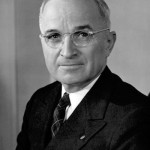
President Harry S. Truman
(Photo: Truman Library)
President Harry S. Truman (Diary Entry July 17, 1945)
“Promptly a few minutes before twelve I looked up from the desk and there stood Stalin in the doorway. I got to my feet and advanced to meet him. He put out his hand and smiled. I did the same. . . . After the usual polite remarks we got down to business. I told Stalin that I am no diplomat but usually said yes or no to questions after hearing all the argument. It pleased him. I asked him if he had the agenda for the meeting. He said he had and that he had some more questions to present. I told him to fire away. He did and it is dynamite—but I have some dynamite too which I’m not exploding now. . . . I can deal with Stalin. He is honest—but smart as hell.”
(Source: The National Archives)
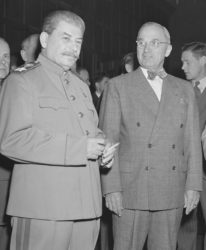
Stalin and Truman
Source: National Archives, Records of the Office of the Chief Signal Officer [111-SC-209221-S]
The meeting between Truman and Stalin took place in a suburb of the devastated city of Berlin just before the opening of the Potsdam Conference. Truman, Stalin, and Great Britain’s Prime Minister Winston Churchill, leaders of the three largest Allied nations, were gathered there to discuss the political future of Europe and the conduct of the war still raging in the Pacific.” (Eyewitness: The National Archives)
The day before this meeting, the atomic bomb had been successfully tested in New Mexico. A week later, on July 24, Truman informed Stalin of a “new weapon of unusual destructive force.” Through his network of spies, Stalin already knew about the atomic bomb.
Read my post, “The Month That Changed the World,” a complete account of events in the final days of World War II.
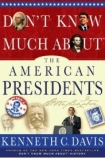
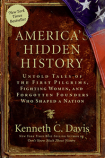
I discuss Truman’s presidency in greater detail in Don’t Know Much About the American Presidents and the post-World War II beginnings of the Cold War in Don’t Know Much About History and The Hidden History of America at War. For more about Stalin read Strongman: The Rise of Five Dictators and the Fall of Democracy.
Now In paperback THE HIDDEN HISTORY OF AMERICA AT WAR: Untold Tales from Yorktown to Fallujah
Don’t Know Much About History (Revised, Expanded and Updated Edition)
[June 11, 2025: Revise of a post first published June 2015]
Thursday June 19, 2025 will mark “Juneteenth National Independence Day.” On Thursday, June 17, 2021, President Biden signed a Juneteenth holiday into law.
Since then, the subject of American History and the role slavery played in the nation’s past–and present–have become an ugly partisan issue. As various states, governors, other politicians, and commentators attempt to diminish the place of slavery in American History, we cannot allow an erasure or whitewashing of this stain on the nation’s soul.
That is why celebrating and understanding “Juneteenth” is more important that ever. We cannot allow it to become just another holiday with sales falling between Memorial Day and July 4th.
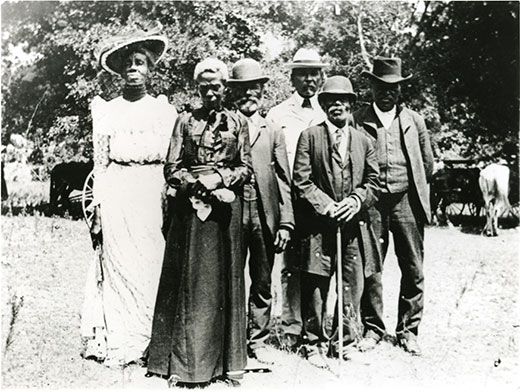
The official Juneteenth Committee in East Woods Park, Austin, Texas on June 19, 1900. (Courtesy Austin History Center, Austin Public Library)
I have been writing and speaking about Juneteenth for many years. And I must admit when I wrote about the origins of the event back in 2011 in Smithsonian and again in a New York Times oped in 2015, I honestly did not envision a day when this celebration of freedom would become a federal holiday. So for those still uncertain, here is the background.
Each year, JUNE 19 is a day to mark “Juneteenth” –a holiday celebrating emancipation at the end of the Civil War in 1865. The word, formed from “June” and “nineteenth,” is a portmanteau –one word formed from two, like “brunch” (breakfast and lunch). It marks the date that a Union Army general informed the enslaved people of Texas that they were free.
“SOME two months after Gen. Robert E. Lee surrendered on April 9, 1865, effectively ending the Civil War, Maj. Gen. Gordon Granger steamed into the port of Galveston, Tex. With 1,800 Union soldiers, including a contingent of United States Colored Troops, Granger was there to establish martial law over the westernmost state in the defeated Confederacy.
“On June 19, two days after his arrival and 150 years ago today, Granger stood on the balcony of a building in downtown Galveston and read General Order No. 3 to the assembled crowd below. ‘The people of Texas are informed that, in accordance with a proclamation from the Executive of the United States, all slaves are free,’ he pronounced.”
Read more of the complete story of Juneteenth in my 2015 New York Times Op-ed, “Juneteenth is for Everyone”.
TO the emancipated people of Texas, the day would be celebrated as “Juneteenth,” a festive holiday marking liberation. It would become a widely shared day of picnics, barbecue, singing, and joy in the African-American community, gradually spreading across the former Confederacy and eventually moving north.
I believe that we have two histories in this country — one white, one black — and they have largely been separate and unequal. The story of Juneteenth is a perfect example of how one of these histories has largely been hidden when we teach American history.
For centuries, slavery was the dark stain on America’s soul, the deep contradiction to the nation’s founding ideals of “Life, liberty and the pursuit of happiness” and “All men are created equal.”
When Abraham Lincoln issued the Emancipation Proclamation on January 1, 1863, he took a huge step toward erasing that stain. But the full force of his proclamation would not be realized until June 19, 1865—Juneteenth, as it was called by enslaved people in Texas freed that day.
“Juneteenth: Our Other Independence Day” My article in Smithsonian (June 15, 2011)
The question of how we teach and talk about enslavement is also the subject of my article in Social Education, the Journal of the National Council for the Social Studies. (NCSS). Read: The American Contradiction: Conceived in Liberty, Born in Shackles.
Foods on the Juneteenth altar include beets, strawberries, watermelon, yams and hibiscus tea, as well as a plate of black-eyed peas and cornbread. Credit Jim Wilson/The New York Times
So how will you celebrate?
The holiday and its rich food traditions are highlighted in these New York Times articles: “Building a Juneteenth Menu for the 21st Century” and “Hot Links and Red Drinks”.
–Thomas Paine, The American Crisis (December 19, 1776)
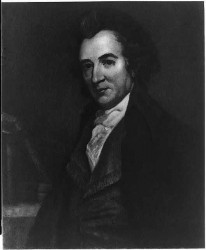
Thomas Paine ©National Portrait Gallery London copy by Auguste Millière, after an engraving by William Sharp, after George Romney oil on canvas, circa 1876
[Originally posted December 2020; revised 1/20/2025]
Thomas Paine was born in England on January 29, 1736 (in the Old Style; his birth-date is also listed as February 9, 1737 in the New Style). Thomas Paine’s essay Common Sense is widely credited with helping to rouse Americans to the patriot cause. Its sales were extraordinary at the time; given today’s American population, current day sales would reach some 60 million copies.
Of more worth is one honest man to society and in the sight of God, than all the crowned ruffians that ever lived.
-Thomas Paine Common Sense
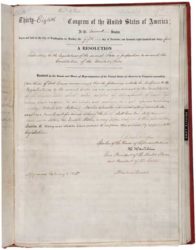
Common sense; addressed to the inhabitants of America, on the following interesting subjects (Library of Congress)
The pamphleteering Paine is best known for Common Sense, which appeared in January 1776 and The Crisis — first published on December 19 1776 — among other works that supported the cause of independence. But after the Revolution, Paine returned to his native England and later went to France, then in the throes of its Revolution.
Paine was caught up in the complex politics of the bloody Revolution there, eventually winding up in a French prison cell, facing the prospect of the guillotine. After eventually being freed, Paine wrote an open letter in 1796 angrily denouncing President George Washington for failing to do enough to secure his release.
“Monopolies of every kind marked your administration almost in the moment of its commencement. The lands obtained by the Revolution were lavished upon partisans; the interest of the disbanded soldier was sold to the speculator…In what fraudulent light must Mr. Washington’s character appear in the world, when his declarations and his conduct are compared together!”
Source: George Washington’s Mount Vernon
This was a serious case of bridge-burning and Paine swiftly fell from grace in America. But apart from dissing the Father of the Country, Paine had also fallen from favor for his most famous work after Common Sense. In 1794, he had published The Age of Reason (Part I), a deist assault on organized religion and the errors of the Bible.
In it, Paine had written:
I do not believe in the creed professed by the Jewish church, by the Roman church, by the Greek church, by the Turkish church, by the Protestant church, nor by any church that I know of. My own mind is my own church.
All national institutions of churches, whether Jewish, Christian or Turkish, appear to me no other than human inventions, set up to terrify and enslave mankind, and monopolize power and profit.
(Source: USHistory.org)
After returning to the United States, which owed so much to him, Paine was regarded as an atheist and was abandoned by most of his friends and former allies. He died in disgrace, an outcast from the United States he had helped create. The Quaker church he had rejected refused to bury him after he died in Greenwich Village (New York City) in 1809. He was buried on his farm in New Rochelle, New York. A handful of people attended his funeral.
An admirer brought his remains back to England for reburial there, but they were lost.
Today he is honored in New York City by a small park named in his honor.
“This park in the heart of New York City’s civic center is named for patriot, author, humanitarian, and political visionary Thomas Paine (1737-1809). The land that is now Thomas Paine Park was once part of a freshwater swamp surrounded, ironically, by three former British prisons for revolutionaries.
His most famous work, Rights of Man (1791), was written after the French Revolution and proposes that government is responsible for protecting the natural rights of its people. Many of Paine’s ideas were strikingly far sighted. He advocated for the abolition of slavery, defended freedom of thought and expression, and proposed an association of nations to avert the spread of conflicts.”
You can read more about Thomas Paine, his relationship with Washington and his ultimate fate in Don’t Know Much About History and Don’t Know Much About the American Presidents.
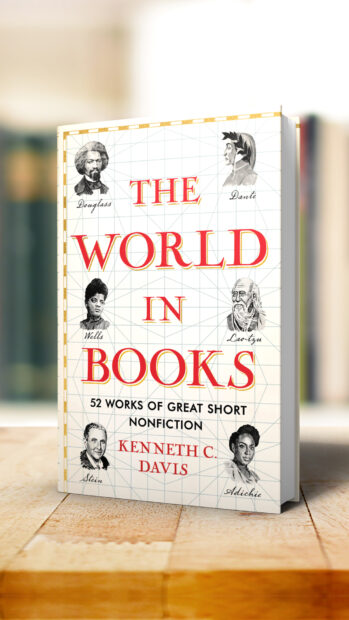
Paine’s book, The AGE OF REASON, is among 52 short works of nonfiction included in THE WORLD IN BOOKS.
(Originally posted January 18, 2013; revised January 10, 2025)
In reflecting on the history of the Presidential Inauguration, I have been re-reading many of the inaugural addresses.
It is safe to say that few of these speeches rise to the level of greatness. My choices for best inaugurals are Lincoln’s first in 1861 (“mystic chords of memory”) and second in 1865 (“with malice toward none”) which both rise to the level of American poetry; and FDR’s first in 1933 (“the only thing we have to fear is fear itself”).
But second inaugurals often have a “Been there, done that” quality. Finding second inaugural speeches that reach greatness is even tougher. George Washington’s second was the shortest ever– a mere 135 words long. In it, he basically said, “I’m going to take the oath again and if I break any laws, you can come after me.”
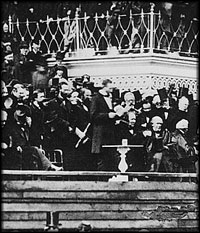
Lincoln’s second, as mentioned above, is among the greatest American speeches. President Lincoln showed how he had moved from preserving the Union to ending slavery:
Yet, if God wills that it continue until all the wealth piled by the bondsman’s two hundred and fifty years of unrequited toil shall be sunk, and until every drop of blood drawn with the lash shall be paid by another drawn with the sword, as was said three thousand years ago, so still it must be said “the judgments of the Lord are true and righteous altogether.”
Abraham Lincoln’s Second Inaugural (March 4, 1865) Photo Courtesy of the Library of C0ngress
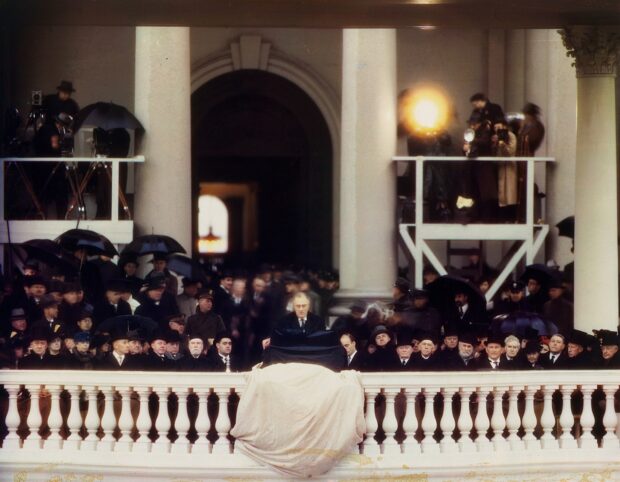
My other favorite is Franklin D Roosevelt’s second inaugural address in 1937. Like Lincoln assaulting slaveholders, Franklin D. Roosevelt did not shy away from taking on the powerful interests that he felt had brought the nation into the Great Depression:
We are beginning to abandon our tolerance of the abuse of power by those who betray for profit the elementary decencies of life.
And the speech includes one of his most memorable phrases as FDR spoke of the great inequity that still existed in America:
I see one-third of a nation ill-housed, ill-clad, ill-nourished.
Franklin D. Roosevelt’s Second Inaugural January 20, 1937 Public Domain Photo Courtesy of National Portrait Gallery https://npg.si.edu/object/npg_NPG.97.134
FDR’s idea of government being able to protect the people has fallen out of fashion in many circles. But anyone who wants a good example for a second inaugural address, might look at how Franklin D. Roosevelt set the bar.
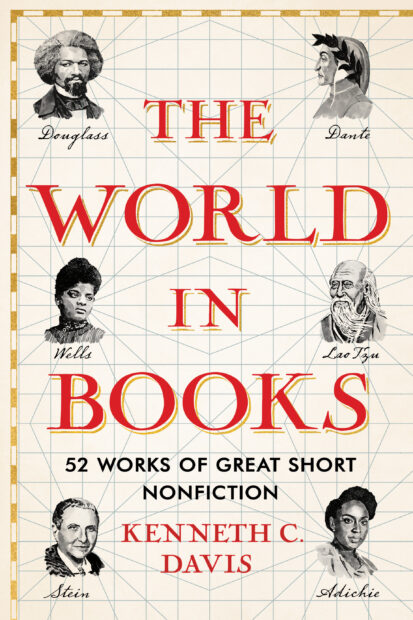
I joined CBS Mornings to talk about the power of reading and The World in Books: 52 Works of Great Short Nonfiction
Listen to my conversation with Dan Skinner, a former Director of Kansas Public Radio and the Audio-Reader Network. He is the host of KPR’s Conversations program. The interview is a little over 25 minutes long and presents an overview of
The World in Books: 52 Works of Great Short Nonfiction (Scribner, October 2024)
“On this edition of Conversations, Kenneth C. Davis talks with host Dan Skinner about “The World in Books: 52 Works of Great Short Non-Fiction.” Davis is the New York Times bestselling author of “America’s Hidden History” and “Don’t Know Much About History,” which gave rise to his series of books on a range of subjects, including mythology, the Bible, geography, and the Civil War. This book is designed as an introduction to short books that will make you think about who you are and what you believe.”
–Kansas Public Radio
[Repost; originally posted 7/26/2013; revised 7/26/2024]
When Lloyd Austin III, a retired general, was confirmed by the Senate as defense secretary in January 2021, he became the the first Black Pentagon chief.
This historic landmark was a reminder that on July 26, 1948, President Harry S. Truman issued two Executive Orders that ended official discrimination in the United States military and the federal workforce.

After Truman’s order. the U.S. military was desegregated and integrated units fought in Korea. (Photo: U.S. Army-November 1950)
It is hereby declared to be the policy of the President that there shall be equality of treatment and opportunity for all persons in the armed services without regard to race, color, religion or national origin. This policy shall be put into effect as rapidly as possible, having due regard to the time required to effectuate any necessary changes without impairing efficiency or morale.
Coming in an election year, it was a daring move by Truman, who still needed the support of southern segregationists. It was also a controversial decision that led to the forced retirement of the Secretary of the Army when he refused to desegregate the Army.
President Truman, the first President to speak to the National Association for the Advancement of Colored People (NAACP), had based part of his platform on civil rights. Successfully elected but stymied by the 80th Congress, President Truman—armed with documentation from his Committee on Civil Rights—called for a special session for Congress. They were to convene on July 26, 1948.
On that hot, summer day in July, Truman signed his name to two documents: Executive Orders 9980 and 9981, integrating the Armed Forces and the Federal workforce.
Truman’s decision reflected the deep racist discrimination that plagued the country, including the celebrated G.I. Bill, passed to help veterans of World War II with education, housing, and job training. The program, while profoundly significant in American history, was largely closed to Black veterans.
Civil rights groups, frustrated by the lack of progress, continued to press Truman on legislation for racial equality. Knowing that civil rights legislation would stall in Congress, and with the reputation of the United States as a great democratic nation being questioned as racism continued to flourish during a nascent Cold War, on July 26, 1948, Truman signed two Executive Orders, 9980 and 9981, desegregating the federal work force and armed services — practices that would take years to be fully carried out.
Source: “Returning From War, Returning to Racism,” New York Times (July 30, 2020)
As historical documents go, ““Executive Order 9980” and “Executive Order 9981” don’t have quite the same ring as “Emancipation Proclamation” or “New Deal.” But when President Harry S. Truman issued these Executive Orders, he helped transform the country. The first desegregated the federal workforce, segregated by President Woodrow Wilson.
The second order began the gradual official process of desegregating America’s armed forces, which was a groundbreaking step for the American civil rights movement.
It is worth noting that many of the arguments made at the time against integration of the armed services — unit cohesion, morale of the troops, discipline in the ranks– were also made about the question of women and gays serving in the military, a policy effectively ended when “Don’t Ask, Don’t Tell” was overturned in 2011.
In a Defense Department history of the integration of the Armed Forces, Brigadier General James Collins Jr. wrote in 1980:
The integration of the armed forces was a momentous event in our military and national history…. The experiences in World War II and the postwar pressures generated by the civil rights movement compelled all the services –Army, Navy, Air Force, and Marine Corps — to reexamine their traditional practices of segregation. While there were differences in the ways that the services moved toward integration, all were subject to the same demands, fears, and prejudices and had the same need to use their resources in a more rational and economical way. All of them reached the same conclusion: traditional attitudes toward minorities must give way to democratic concepts of civil rights.
Integration of the Armed Forces: 1940-1965 (U.S. Army Center of Military History)
Here is the text of the Executive Order 9981 (Source: Harry S. Truman Library and Museum; dated July 26, 1948)
Four years ago, in the the thick of the pandemic and other crises, the two major party nominating conventions went mostly virtual.
As I wrote at the time:
“Will there be a virtual balloon-drop? That is about the only intrigue left when it comes to what will happen at this year’s national political conventions. Even more so than usual, the chance for high drama at the twin events is largely zero. Not just because both the Democrats and the Republicans have chosen their candidates, but because both will mostly be held remotely in the wake of the COVID-19 pandemic.” (Smithsonian, August 12, 2020)
Yes, it seems like one hundred years ago, not four.
Once upon a time, nominating conventions captured national attention. Over time, changes in the primary election process largely negated the drama as candidates had secured the delegate count they needed long before the first nominating speech.
While we might have thought that the intrigue of the 2024 conventions was gone, the future of the Biden candidacy is now less certain.
Intrigue is back. And this year’s Democratic convention may go down in presidential history. This convention may matter a great deal.
Let’s take a look back at the political conventions that mattered most. Read “The Top Ten Political Conventions That Mattered Most” published in Smithsonian magazine (Originally published August 2012).
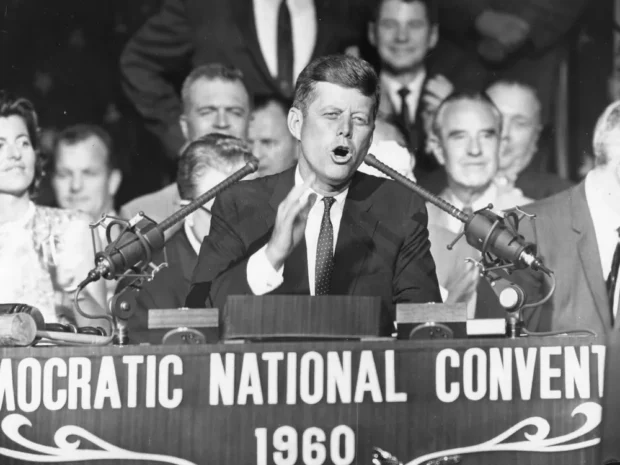
John F. Kennedy addresses the Democratic National Convention in Los Angeles after being nominated for President. PhotoQuest / Getty Images via Smithsonian Magazine
We’ll start with 1831.
1831 Anti-Masonic Convention—Why start with one of the most obscure third parties in American history? Because they invented nominating conventions. The Anti-Masons, who feared the growing political and financial power of the secret society of Freemasons, formed in upstate New York; among their members was future president Millard Fillmore.
Read the full piece in Smithsonian magazine
(Post updated May 20, 2024)
Some governors would have us teach “the basics.” So here goes:
LET’S SET THE RECORD STRAIGHT— Memorial Day is about Slavery
It is not about swimsuit sales, the start of summer, or the hot dogs on the barbie.
Memorial Day, the most solemn occasion on the national calendar now honors the nation’s war dead. But it was born out of the the Civil War, which was fought because of slavery, America’s original sin. Memorial Day is about a nation “conceived in liberty” but born in shackles.
In these fraught times, when teaching history has become so contentious, we must tell it straight when we observe the history behind the holiday. Here are some basic facts:
1) Memorial Day was conceived as Decoration Day, first marked in May 30, 1868 by a proclamation of General John Logan, leader of a powerful Civil War veterans group. His original proclamation –“General Orders, No. 11”– read, in part: “Their soldier lives were the reveille of freedom to a race in chains and their deaths the tattoo of rebellious tyranny in arms.”
The day was an occasion for visiting the cemetery and decorating the graves of fallen Union soldiers who died in the Civil War.
2) The Civil War was fought over slavery. The “states rights” argument was put forward by “Lost Cause” apologists and eventually accepted by educators who wanted to diminish the significant role of slavery both in American history and in bringing about the war.
The Hidden History of America At War (paperback)
Read more about the divisive history of Memorial Day in an earlier post.
Don’t Know Much About the Civil War (Harper paperback, Random House Audio)
The truth matters. Now more than ever. So, once and for all, we must set the record straight.
As we observe Memorial Day, a day for honoring our nation’s war dead, let us emphasis these truths about America’s deep history of slavery.
Here are five important points that illustrate the through-line of slavery in American history, from the founding through the Civil War:
READ MORE in my article “Conceived in Liberty, Born in Shackles” (Social Education, March-April 2020)
(Previous post updated 8 May, 2024)
Happy 140th Birthday!
Harry Truman, 33rd President of the United States, was born on May 8, 1884.
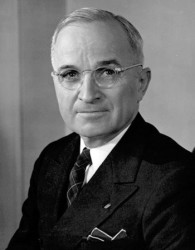
President Harry S. Truman
(Photo: Truman Library)
It was on his birthday in 1945 that Truman was able to tell Americans that the war in Europe was over with the surrender of Germany.
THIS IS a solemn but a glorious hour. I only wish that Franklin D. Roosevelt had lived to witness this day. General Eisenhower informs me that the forces of Germany have surrendered to the United Nations. The flags of freedom fly over all Europe. For this victory, we join in offering our thanks to the Providence which has guided and sustained us through the dark days of adversity.
Described as “a minor national figure with a pedestrian background,” Truman was a World War I veteran and a Senator from Missouri when Franklin D. Roosevelt chose him to become his running mate in the 1944 election. Truman became vice president when FDR won his fourth term and then took office on April 12, 1945 when FDR died.
When he took office, Truman had been largely left “out of the loop” by Roosevelt as World War II entered its final months. Truman did not know of the existence of the “Manhattan Project” and the development of the atomic bomb until he became president. Then he had to make the decision to use it against the Japanese.
Fast Facts
•Truman was a member of the Sons of the Revolution and the Sons of Confederate Veterans
•He wanted to attend West Point but poor eyesight kept him out. He enlisted in the Missouri National Guard and served as the commander of an artillery battery in World War I.
•Before entering politics, he was a farmer, bank clerk, insurance salesman and owner of a failed haberdashery store.
•As president he once threatened to punch the nose of a newspaper critic who had given his daughter a poor review after her debut singing recital. Margaret Truman went on to greater fame as a mystery novelist, beginning with Murder in the White House published in 1980.
Harry S. Truman died on December 26, 1972.
The Truman Library and Museum is located in Independence, Missouri
Read more about Truman, his life and administration in Don’t Know Much About® the American Presidents. Truman is also featured in the Berlin Battle chapter of The Hidden History of America at War.
Don’t Know Much About History (Revised, Expanded and Updated Edition)
THE HIDDEN HISTORY OF AMERICA AT WAR: Untold Tales from Yorktown to Fallujah
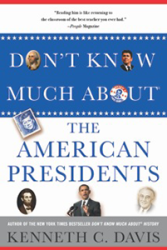
Don’t Know Much About® the American Presidents (Hyperion paperback-April 15, 2014)